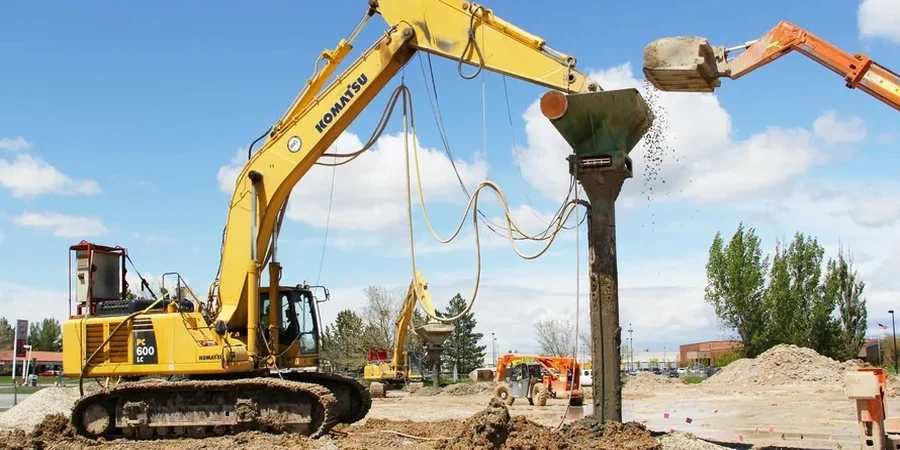
The vibroflot itself is a rugged piece of equipment—a long, cylindrical probe with eccentric weights and water jets that sinks vertically into granular soil under its own assisted weight. In New York City, we often rig these units onto crawler cranes that navigate tight Midtown lots or reposition between bridge piers along the East River. The design phase before mobilization is where most of the value lies. You need a grid spacing that handles the heterogeneous mix of glacial outwash, decomposed rock, and historical fill common across the five boroughs. A blanket 8-foot triangular pattern might work on clean Long Island sands, but that same layout can fail in the uncompacted ash and rubble zones we still encounter in lower Manhattan. Our approach ties the vibrator frequency, amperage, and interval directly to the grain-size curves from the site investigation, because without that calibration you are just shaking the ground and hoping for the best.
In New York City glacial and fill terrain, a vibrocompaction design that is not continuously calibrated to CPT resistance data is just a guess with a very loud vibrator.