GEOTECHNICAL ENGINEERING
NEW YORK
HomeFoundationsRaft/mat foundation design

Raft/Mat Foundation Design in New York

Geotechnical engineering with regional judgment.

LEARN MORE

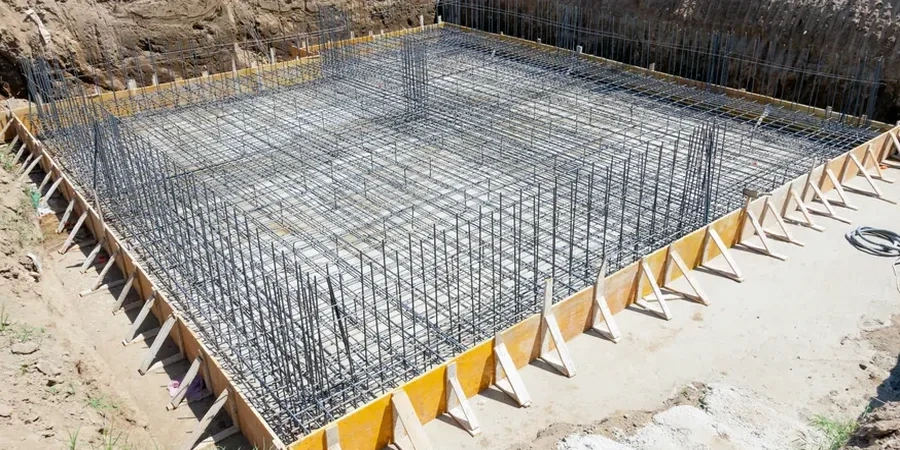
IBC Chapter 18 and ASCE 7-22 set the floor for every deep foundation in New York, but a mat foundation in Lower Manhattan is not the same animal as one in Staten Island. The difference is the soil column. We design raft and mat foundations in New York starting from the geotechnical baseline: compressible varved clays in Queens, uncontrolled fill along the Hudson, and the Manhattan schist that drops 200 feet deep south of 14th Street. Without a CPT test to map the soil stiffness profile, a uniform mat thickness is a guess. We run the CPT, extract the modulus, and feed it directly into the finite element model. In New York, a mat foundation must handle not just the tower load but also the eccentricity from adjacent excavations and the long-term settlement of organic silts. The IBC requires a factor of safety of 3.0 for bearing; we check it against the actual stratigraphy, not a textbook profile.

A mat foundation in New York succeeds or fails on the subgrade reaction modulus. One uniform value for a non-uniform soil profile is the fastest path to differential settlement.
Our service areas

How we work

A common mistake in New York is to specify a mat thickness based on column spacing alone, ignoring the deeper compressible layers. We saw a project in Long Island City where 18 inches of organic silt at 30 feet cut the allowable bearing in half. The structural engineer had sized the mat for 8 ksf; the soil gave 4 ksf. We redesigned the mat foundation in New York after a grain-size analysis confirmed the silt lens and a consolidation test quantified the settlement. The corrected design used a variable-thickness mat with perimeter stiffening, bringing the edge pressure within tolerance. The IBC allows performance-based design when ground conditions are non-uniform; we use that path. Mat foundations in New York often require a modulus of subgrade reaction that varies across the footprint. We map it with plate load tests and back-calculate the Winkler springs for the structural model. The result is a mat that works with the soil, not against it.
Raft/Mat Foundation Design in New York
Technical reference — New York

Local considerations

The Hudson River waterfront and the reclaimed land along the East River put New York mat foundations at risk from two sides: soft compressible fill and a shallow water table that fluctuates with tide and storm surge. In the Financial District, the fill is 30 to 40 feet thick, with wood debris and boulders mixed in. A uniform mat on that fill will settle differentially, cracking the slab and overloading the columns on the stiff side. We run a seismic refraction survey to map the bedrock depth and the fill-bedrock transition before we set the mat geometry. In flood zones, we also check buoyancy: a mat foundation in New York within the 100-year floodplain must resist uplift from groundwater. We design the mat weight and passive anchors accordingly. The risk is not just structural; it is schedule. A mat that needs rework because the soil was mischaracterized costs months, not weeks.

Need a geotechnical assessment?

Reply within 24h.

Email: contact@geotechnical-engineering.vip

Regulatory framework

IBC (International Building Code) Chapter 18, ASCE 7-22 Minimum Design Loads, ASTM D1586 Standard Penetration Test, ASTM D2487 Soil Classification, ACI 318 Building Code for Structural Concrete

Reference parameters

ParameterTypical value
Bearing pressure range (ksf)2.0–8.0 depending on stratigraphy
Modulus of subgrade reaction (pci)50–400, mapped per zone
Minimum factor of safety (bearing)3.0 per IBC 1806.1
Settlement analysis method3D FEM with consolidation coupling
Mat thickness range (in)18–72 depending on column loads and soil stiffness
Reinforcement gradeASTM A615 Grade 60 or 75
Soil-structure interaction modelWinkler springs calibrated to field modulus

Common questions

What does raft/mat foundation design cost in New York?

The engineering fee for a complete mat foundation design in New York, including geotechnical investigation, modulus mapping, and 3D soil-structure interaction analysis, typically falls between US$960 and US$4,330. The spread depends on the mat area, the number of borings or CPTs required, and whether the site is on natural soil or deep urban fill.

When is a mat foundation better than individual footings in New York?

A mat makes sense when the soil bearing capacity is low and variable across the footprint, or when column spacing is tight and isolated footings would overlap. In New York, we specify mats on compressible fill along the waterfront, on varved clays in Queens, and on sites where rock is too deep for end-bearing piles to be economical.

How do you determine the modulus of subgrade reaction for a New York mat?

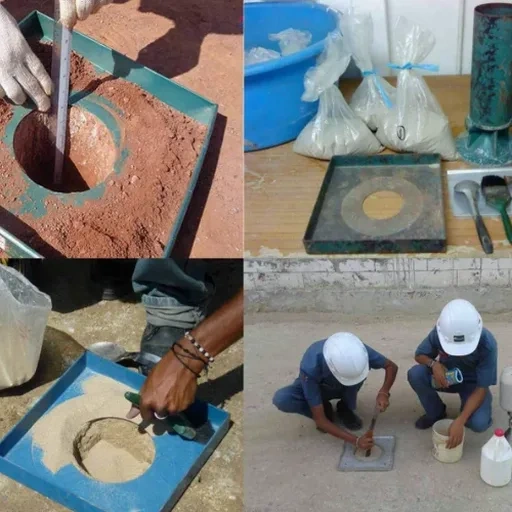
We do not use a single textbook value. We run plate load tests at multiple locations on the prepared subgrade, measure the load-deflection curve, and back-calculate the Winkler spring stiffness for each zone. The IBC allows this performance-based approach, and it is the only way to avoid overdesigning the mat thickness.

Can a mat foundation handle New York flood zone requirements?

Yes, but buoyancy must be checked. In FEMA flood zones A and V, we calculate the uplift force from the design flood elevation, add a safety factor, and verify that the mat dead weight plus any passive anchors exceeds the uplift. We also specify waterproofing details at the mat perimeter and at utility penetrations.

Location and service area

We serve projects in New York and surrounding areas.

View larger map