GEOTECHNICAL ENGINEERING
NEW YORK
HomeUnderground ExcavationsGeotechnical analysis for soft soil tunnels

Soft Soil Tunnel Geotechnics in New York City

Geotechnical engineering with regional judgment.

LEARN MORE

New York City’s subsurface is a layered record of glacial retreat, sea-level fluctuation, and centuries of anthropogenic fill. The saturated varved clays beneath Queens, the organic silts flanking Jamaica Bay, and the compressible alluvium lining the Hudson River margins create a tunneling environment where face pressure must be calibrated foot by foot. A subsurface investigation program that integrates continuous sampling, in-situ strength profiling, and laboratory consolidation testing is not optional when alignment passes through these deposits. The 2015 Second Avenue Subway Phase 1 contract reports documented over 40 distinct soil units within 1.2 miles, underscoring how rapidly stratigraphy shifts in this region. For soft ground tunnels, the geotechnical analysis must resolve the undrained shear strength envelope, the pre-consolidation stress history, and the sensitivity of the clay matrix to remolding during TBM advance. A CPT test profile through the Meadowlands varved clay, for instance, reveals pore pressure dissipation curves that directly inform cutterhead closure rate and muck conditioning requirements.

Face stability in New York's varved clay requires quantifying the undrained strength ratio su/σ′v0 at strain rates matching TBM advance—a parameter that routine site investigation programs often miss.
Our service areas

How we work

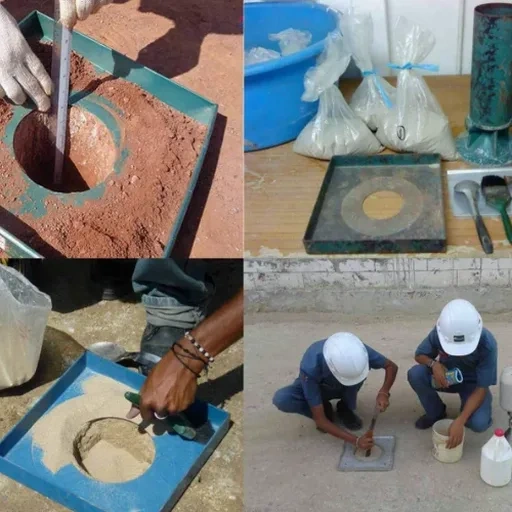
The analytical framework for soft soil tunnels in New York relies on high-quality undisturbed sampling executed with thin-walled Shelby tubes advanced through mud-rotary boreholes. Samples are sealed, transported at in-situ moisture, and tested within 48 hours. The laboratory sequence includes incremental oedometer loading to define the compression index Cc, recompression index Cr, and the apparent preconsolidation pressure σ′p using Butterfield’s ln(1+e) method. Triaxial compression under K₀-consolidated, undrained conditions provides the effective stress friction angle and excess pore pressure generation curves needed for coupled consolidation analysis. The team runs constant-volume direct simple shear on specimens trimmed from the same Shelby tube to isolate post-peak softening behavior critical for stand-up time estimation. Index testing—water content, Atterberg limits, and hydrometer grain-size distribution—is performed in parallel on split-spoon samples retrieved from SPT intervals, linking penetration resistance to soil classification per ASTM D2487. This multi-path characterization, executed in an ISO 17025 accredited laboratory, builds the constitutive model parameters for PLAXIS 3D or FLAC3D simulations of the sequential excavation and lining installation process.
Soft Soil Tunnel Geotechnics in New York City
Technical reference — New York

Local considerations

At City Water Tunnel No. 3 contract depths exceeding 200 meters below Manhattan schist, the transition from hard rock to soft ground occurs across a weathered interface where saprolitic material retains relict foliation but loses 80% of its unconfined compressive strength within a few meters. Face collapse and chimney-type failures have been documented in similar transitions worldwide. In shallower urban cuts, uncontrolled volume loss in soft clay can propagate settlement troughs exceeding 1.5 inches at surface level, damaging century-old cast-iron water mains and masonry foundations. The 2021 NYC Building Code Chapter 33 requires a geotechnical interpretive report addressing face support pressure, groundwater control, and ground movement predictions for any tunnel exceeding 20 feet in diameter. Ignoring the strain-softening behavior of the varved clay—which loses 40–60% of its peak shear strength after remolding—leads to underestimation of the required face pressure by a factor of 1.5 or more, a margin that invites blowout during compressed-air or slurry shield operations in saturated conditions.

Need a geotechnical assessment?

Reply within 24h.

Email: contact@geotechnical-engineering.vip

Video resource

Regulatory framework

ASTM D1586 – Standard Test Method for Standard Penetration Test (SPT) and Split-Barrel Sampling of Soils, ASTM D2487 – Standard Practice for Classification of Soils for Engineering Purposes (Unified Soil Classification System), ASCE 7-22 – Minimum Design Loads and Associated Criteria for Buildings and Other Structures, IBC 2021 – International Building Code, Chapter 18 Soils and Foundations, ASTM D4767 – Standard Test Method for Consolidated Undrained Triaxial Compression Test for Cohesive Soils

Reference parameters

ParameterTypical value
Undrained shear strength (su)18–55 kPa (varved clay, Harlem/Queens)
Sensitivity (St)3–8 (moderate to high in organic silt)
Compression index (Cc)0.25–0.55
Preconsolidation pressure (σ′p)80–220 kPa (depth-dependent)
Hydraulic conductivity (kv)5×10⁻⁹ to 2×10⁻⁷ m/s
Plasticity index (PI)20–45%

Common questions

What is the typical cost range for a geotechnical analysis supporting a soft soil tunnel in New York City?

The cost for a comprehensive geotechnical analysis for soft soil tunnels in New York typically ranges from US$4,600 to US$17,460, depending on the length of the alignment, the number of boreholes, the complexity of the laboratory testing program, and the level of numerical modeling required for the interpretive report.

How is the face support pressure calculated for soft ground tunnels in the New York area?

Face support pressure is calculated using limit equilibrium methods (Anagnostou & Kovári) and verified with coupled finite element analysis. The input parameters—undrained shear strength, effective friction angle, and pore pressure distribution—come from CIU triaxial and CPTu dissipation tests on the varved clay and organic silt units along the alignment.

Which ASTM standards govern the laboratory testing for soft soil tunnel design in the United States?

The laboratory program follows ASTM D4767 for consolidated-undrained triaxial compression, ASTM D2435 for one-dimensional consolidation, and ASTM D6528 for constant-volume direct simple shear. Soil classification adheres to ASTM D2487, and in-situ penetration testing follows ASTM D1586 for the SPT and ASTM D5778 for the CPT.

Location and service area

We serve projects in New York and surrounding areas.

View larger map