GEOTECHNICAL ENGINEERING
NEW YORK
HomeLaboratoryLaboratory CBR test

Laboratory CBR Testing in New York: ASTM D1883 Compliance & Subgrade Strength

Geotechnical engineering with regional judgment.

LEARN MORE

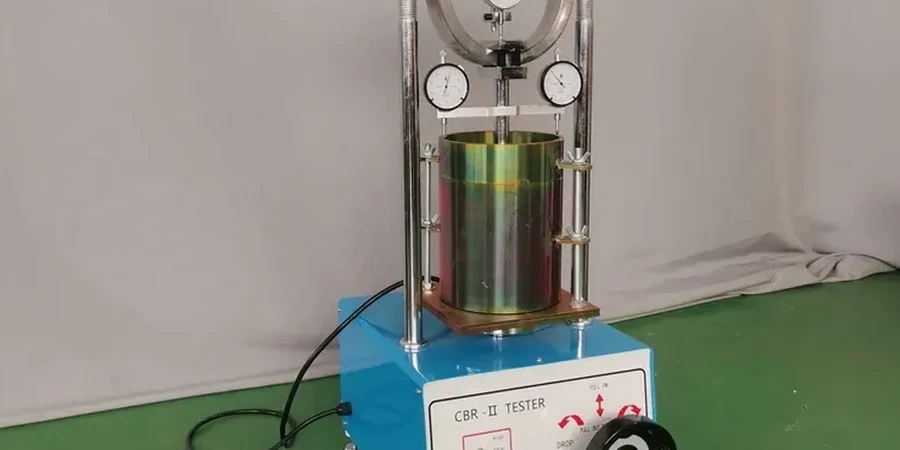
New York City building codes reference ASTM D1883 for California Bearing Ratio determination whenever pavement or subgrade evaluation is required. The five boroughs sit on a complex mix of glacial till, varved clays, and urban fill. Bedrock varies from shallow in Manhattan schist to deep in parts of Queens, but the real challenge is the man-made ground. Our laboratory CBR test quantifies the bearing capacity of subgrade soil under controlled moisture and density conditions. The test simulates the worst-case saturation scenario that New York streets face during spring thaw and nor'easter flooding. Without a proper soaked CBR value, pavement sections designed for NYC traffic loads will rut prematurely. We run the procedure in an ISO 17025-accredited lab, using a calibrated loading press applying penetration at 0.05 inches per minute. The results feed directly into the AASHTO 1993 pavement design equation and NYC DOT specifications.

A 4-day soaked CBR test reveals what your subgrade will really do under New York's worst drainage conditions.
Our service areas

How we work

In New York, we often see projects where the subgrade looks competent during dry summer excavation but softens dramatically once exposed to water. That is exactly why the soaked CBR protocol exists. A sample compacted at optimum moisture in a 6-inch-diameter mold is submerged for 96 hours before penetration. We apply a 10-pound surcharge weight to simulate overlying pavement. The plunger pushes into the soil at 0.05 in/min while load readings are recorded at 0.1-inch intervals up to 0.5 inches. The CBR number is the ratio of corrected stress to the standard crushed stone reference. Values below 3% indicate a problematic subgrade that will require stabilization or replacement. NYC DOT and NYSDOT typically demand a minimum soaked CBR of 10% for flexible pavement subgrade. For rigid pavement on lean clay, we often see specifications requiring 6% or higher. The unsoaked CBR is reported as well, but the soaked value governs design. We also run companion grain size analysis to classify the soil per ASTM D2487, which helps interpret whether the CBR is consistent with the expected soil type.
Laboratory CBR Testing in New York: ASTM D1883 Compliance & Subgrade Strength
Technical reference — New York

Local considerations

The most common mistake on New York City projects is accepting unsoaked CBR values for pavement design. We have seen contractor labs run a quick penetration on a dried-out sample and report a CBR of 25%, only to have the same soil fail at 4% after a wet winter. The difference is not marginal. It means the pavement structure is undersized by a factor of two or more in granular base thickness. Another frequent error is compacting the CBR sample at the wrong moisture content. If the sample is prepared at 2% below optimum, the resulting CBR will be artificially high and will not represent field conditions after construction traffic and rain. NYC DOT inspectors will reject submittals where the laboratory CBR test does not follow the full soaking protocol. For brownfield sites with urban fill containing brick, ash, and demolition debris, the standard 6-inch mold may not be representative. We address this by running multiple specimens and reporting the range, not just a single optimistic number.

Need a geotechnical assessment?

Reply within 24h.

Email: contact@geotechnical-engineering.vip

Regulatory framework

ASTM D1883: Standard Test Method for California Bearing Ratio (CBR) of Laboratory-Compacted Soils, ASTM D698: Standard Test Methods for Laboratory Compaction Characteristics of Soil Using Standard Effort, ASTM D1557: Standard Test Methods for Laboratory Compaction Characteristics of Soil Using Modified Effort, ASTM D2487: Standard Practice for Classification of Soils for Engineering Purposes (Unified Soil Classification System), NYC DOT Standard Highway Specifications

Reference parameters

ParameterTypical value
StandardASTM D1883 / AASHTO T 193
Mold diameter6 in (152.4 mm)
Soaking period96 hours submerged
Surcharge weight10 lb (minimum)
Penetration rate0.05 in/min (1.27 mm/min)
Reported valuesCBR at 0.1" and 0.2" penetration
Sample preparationCompacted per ASTM D698 or D1557

Common questions

What does a laboratory CBR test cost in New York?

A single-point soaked CBR test with standard Proctor compaction typically ranges from US$140 to US$200. A three-point CBR curve with full compaction data runs higher. The exact cost depends on soil type and whether we need to run companion classification tests. Contact our lab for a project-specific quote.

How long does a laboratory CBR test take?

The full soaked CBR procedure requires four days of soaking plus one day for compaction and penetration testing. Plan on five working days from sample receipt to final report. Unsoaked CBR can be completed in one day but is not accepted by NYC DOT for pavement design.

What is the minimum CBR value NYC DOT requires?

NYC DOT and NYSDOT typically require a minimum soaked CBR of 10% for flexible pavement subgrade. Soils with CBR below 3% are considered unsuitable and generally require stabilization with cement or lime, or complete removal and replacement with select granular fill.

Location and service area

We serve projects in New York and surrounding areas. More info.

View larger map