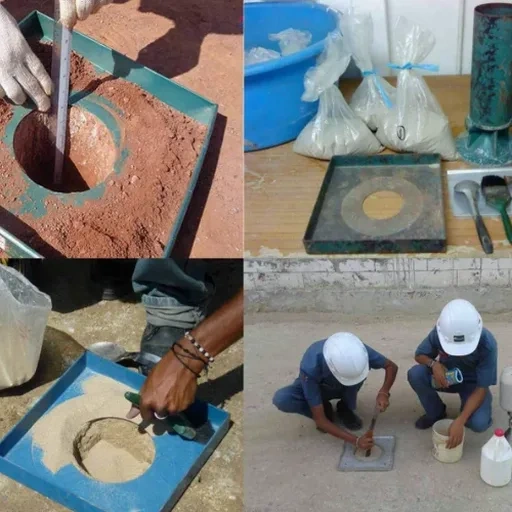
New York City's five boroughs sit on an incredibly varied geological foundation—from the metamorphic schist and gneiss of Manhattan's bedrock spine to the deep glacial till, varved clays, and compressible organic silts underlying parts of Queens and Brooklyn. The depth to bedrock shifts dramatically within blocks: it sits near the surface in Midtown but plunges over 200 feet near the East River, and the water table often appears within 10 to 15 feet of grade. These contrasts make flexible pavement design anything but standardized here. A section of roadway in Staten Island's serpentinite terrain behaves entirely differently than an industrial parking lot built on reclaimed marshland in Jamaica Bay. We approach each project by mapping the subgrade variability first—running laboratory CBR on Shelby tube samples and correlating with field DCP soundings—so the pavement structural number and layer coefficients we specify actually reflect what lies beneath the asphalt. For projects where traffic loading is particularly severe, we often coordinate the pavement analysis with a CBR road assessment to calibrate design parameters against actual subgrade performance before finalizing the section.
A pavement section that works on the schist bedrock of Upper Manhattan will fail prematurely on the compressible clays of western Queens—local subgrade knowledge drives every layer thickness decision.